
Creatine Supplements: CYANIDE for Body Builders?!?
More Useless Toxic Synthetic Garbage


Creatine is one of the most popularly recommended supplements for bodybuilders. As our helpful AI bot describes it, “Creatine is a natural compound found in muscle cells that helps produce energy during high-intensity exercise. It is commonly used as a dietary supplement to enhance athletic performance and muscle growth.”
Some supplement sellers advertise it thusly: “Boost Your Energy, Muscle, and Brain with our Creatine!” That’s quite an impressive amount of boosting.
And that sounds ODDLY similar to our pal, Vitamin B12, whose sellers also boast its merits of energy-boosting, along with enhancing the building of muscle mass, reversing brain fog and impaired memory, and improving poor concentration!
Also strikingly similar to the B12 story is the claim that creatine can only “naturally” be found in meat, fish, or milk from animals. Apparently, both “essential” substances only lurk in the bodies of living or deceased animals (or in convenient pill bottles… or jars of the mystery meat known as SPAM).
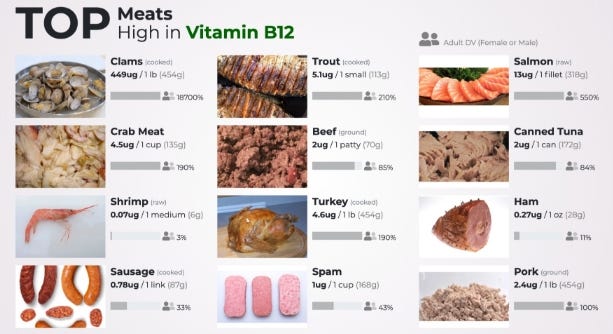
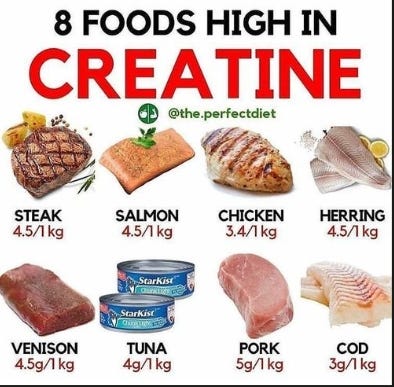
Along with the claim that creatine is known for its “role in rapid energy production,” it is also described as helping to “regenerate adenosine triphosphate (ATP) during short bursts of high-intensity activity, such as sprinting or weightlifting, by donating phosphate to adenosine diphosphate (ADP) to form ATP again.”

SAY WHAT?!? That’s scientific-speak for “If we just said it in plain English, you would realize it does ABSOLUTELY NOTHING PROVABLE.”
There’s also a saying that if you can’t explain something simply, you don’t understand it well enough… or it’s not meant to be understood by the general public for a reason. But dumping the obtuse and convoluted jargon, and simplifying these oh-so-complex scientific processes, would not benefit those who dream up these drug and supplement schemes.
You see, it’s all about making the consumer feel so helpless and ignorant that they soon learn it’s just simpler to rely on the “learned professionals.” After all, they’re the ones with all the advanced knowledge and specialized academic training, and the rest of us are just dim bulbs and dum-dums who can’t be trusted to make our own health decisions.
We need to constantly fret and worry over what “vitamin deficiencies” we have, and get our blood tested regularly at the doctor’s office.


Every single “vitamin” supplement ever created in a drug lab has involved using organs and other internal parts obtained from animals (like the infamous raw cow’s liver in B12 and cod liver oil in Vitamin D). And creatine supplements are no different.
Vivisection experiments have also been invariably linked and credited with playing crucial roles in each “discovery.” With creatine in particular, it has been claimed that “various experiments on animals helped uncover its muscle-enhancing effects.”

First to venture into the exciting world of creatine was a scientist in France by the name of Michel Eugene Chevreul. He became the first man to “successfully extract creatine from meat” in 1832. What an accomplishment! We can only surmise that it must have just magically appeared and was then identified, or rather, “isolated.”
Perhaps it even jumped out of the rib eye and announced itself!

Next, in 1847, a German scientist by the name of Justus von Liebig “replicated Chevreul’s findings that creatine can be extracted from animal flesh.” He conducted experiments on all kinds of animals, both domestic and wild.

Extracting the creatine from animal flesh turned out to have more than one benefit, though. As it so happened, Justus had quite the lucrative little side business going on during all of these experiments: He produced and sold meat broth. It was the “famous Liebig’s meat extract, or Fleischbrühe in German, which contained about 8% Cr.” The sale of this broth handily helped finance all the vivisection experiments in his laboratory.
As for this “meat extract” stuff, it’s yet another popular ingredient used in the original formulas of supplements and drugs, such as Vitamin B12 and its antibiotic sibling, Streptomycin.
Mr. von Liebig then cleverly “chemically identified Cr as methylguanidino-acetic acid.” You may recognize the prefix of methyl, which is a popular ingredient used in supplements and derived from the highly flammable methane.

The other component, guanidino, is described as a “strongly alkaline compound formed by the oxidation of guanine, found in urine as a product of protein metabolism.”
Hmmm… Did someone say URINE?!? Makes you wonder just what Mr. von Liebig had swimming around in his test tubes with the meat extract…

It was during the 1880s that a substance dubbed as “creatinine (Crn)” was discovered (apparently by some anonymous scientists in a lab). It was immediately realized that this compound was “likely the natural breakdown product of Cr.”
Then, in 1926, another scientist by the name of Alfred Chanutin surmised that creatine was absorbed by the intestine. He did some quick math, and came up with the idea that this meant it could be obtained from alimentary sources such as fresh fish and meat (including Mr. Liebig’s famous meat broth).
A year later, in 1927, phosphocreatine (PCr) was discovered. But here’s the curious part: Two independent groups SIMULTANEOUSLY discovered this substance AT THE SAME TIME in two different parts of the world:
Grace and Philip Eggleton at the University of Cambridge in England, and Cyrus Fiske and Yellapragada Subbarow at Harvard Medical School in the U.S., in Boston, Massachusetts.
And, once again, this detail is eerily similar to the story of Vitamin B12, when it was first announced simultaneously by two independent groups on opposite sides of the world: Karl Folkers with Merck in the U.S., and Ernest Lester Smith of Glaxo Company in the UK. Each team published papers on their identical “red pigment” and “red crystalline compound” discoveries just days apart.

It’s almost as if these groups are in communication with each other and there’s a blueprint being followed. Ya think?
It was then decided that obtaining creatine from “fresh meat” was neither economically viable nor a speedy process. So it wasn’t until the 1950s that a synthetic variant of creatine could be created and “isolated” in the laboratory – and then mass produced for the sale of those MAGICAL MUSCLE-BUILDING SUPPLEMENTS!!!
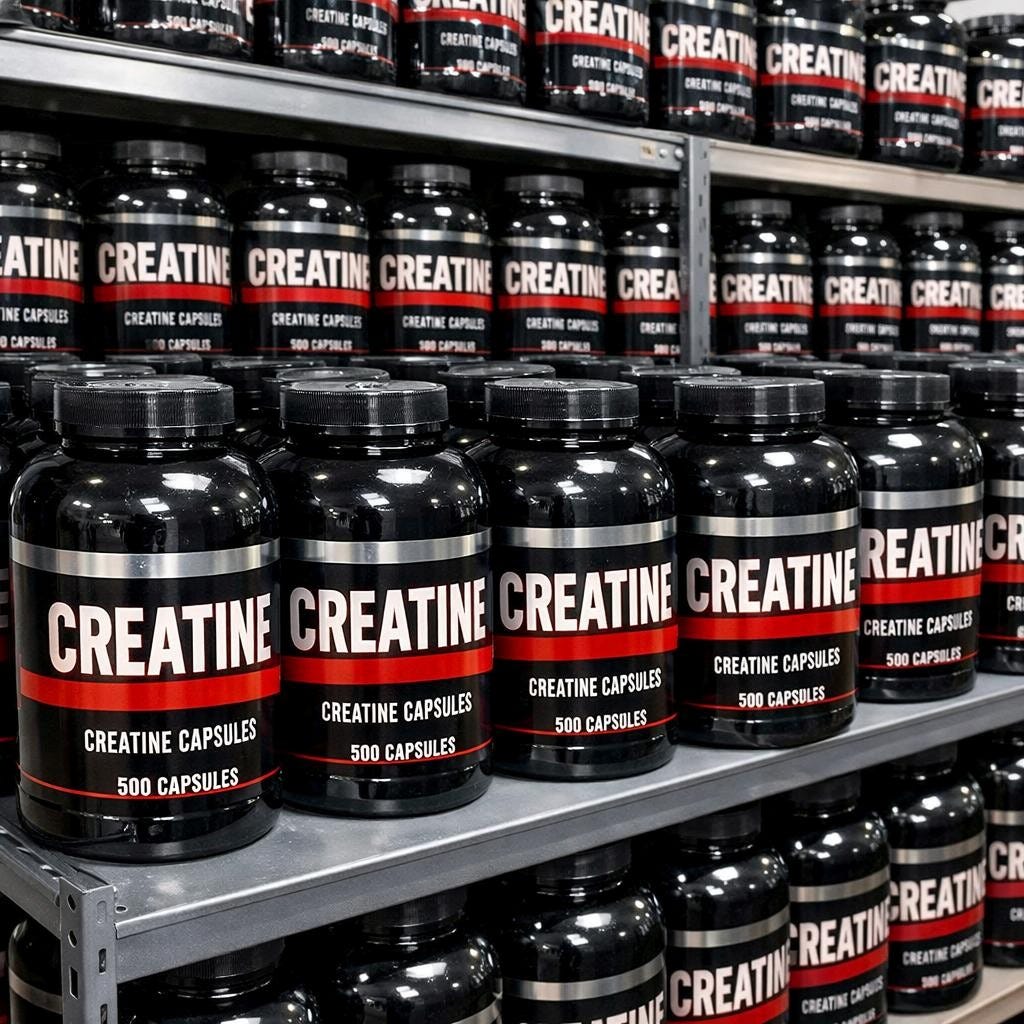
So you’re now probably wondering: What are the actual ingredients used in the modern-day manufacturing of these creatine pills, since using “meat extracts” and animal flesh was determined not to be financially viable?
According to CHEMWIN, China Chemicals Trade, there are three methods used to create CYANAMIDE, which is the main ingredient in creatine supplements.
Now, if you think CYANAMIDE has some connection to CYANIDE, you’d be correct. In fact, cyanide ions are used to make it. Both substances are white crystalline solids deemed toxic, with cyanide being a bit more soluble in water, and both having similar molecular weights.
The PubChem Compound Summary on Cyanamide describes it as “a highly reactive chemical and a dangerous explosion hazard. Repeated or prolonged contact may cause skin sensitization and allergy. Exposure may cause liver and nervous system damage.” Science Direct reports it as being “toxic and harmful to aquatic organisms.”
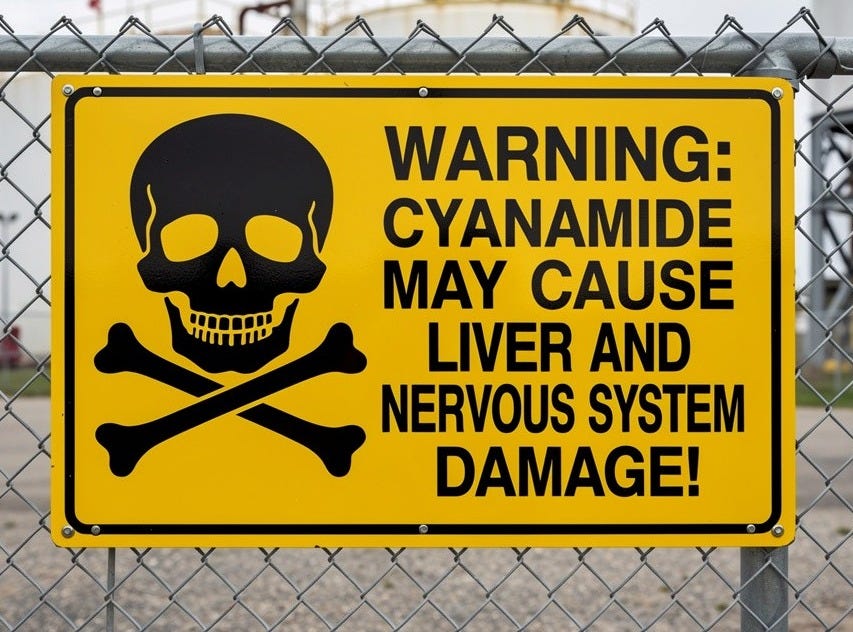
The first method of manufacture involves a direct current being passed through cyanide ions fed into an electrolysis tank. The cyanide on the electrode is oxidized to form cyanamide and hydrogen gas.
The second method uses acrylonitrile, which is actually VINYL CYANIDE. This substance is used primarily in the production of acrylics, plastics, and rubber, and is also used in the manufacture of adhesives, resins, and other polymers. But apparently that doesn’t stop it from being used in SUPPLEMENTS meant to be ingested for “health benefits”!
This compound is highly flammable and carcinogenic. It is considered hazardous by the 2012 OSHA Hazard Communication Standard, with acute oral, dermal, and inhalation toxicity. The organ toxicity targets the liver, kidney and blood.
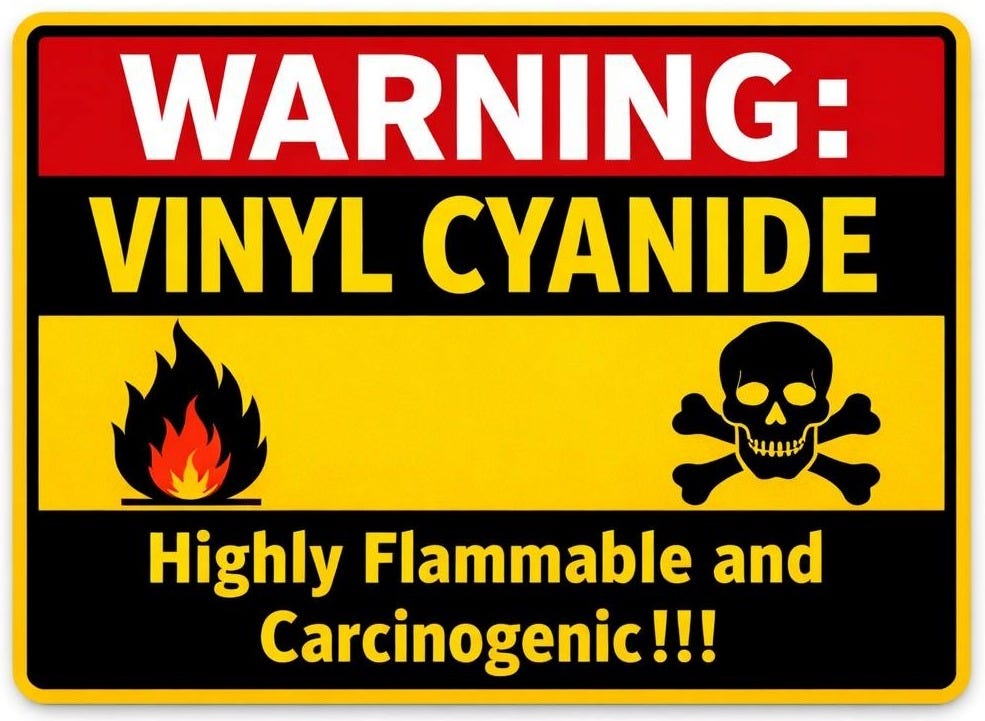
The vinyl cyanide is mixed with water and heated using hydrolysis to generate acrylamide. The acrylamide then reacts with ammonia to form cyanamide and acrylonitrile, or vinyl cyanide. This production process will produce certain wastewater and exhaust gas, which will need to be effectively treated.
The third method for making creatine is to use lime nitrogen, also known as CALCIUM CYANAMIDE, which is a slow-acting granular fertilizer that is “effective in controlling weeds.” (But, again, apparently just fine to be made into an ingestible supplement!) The lime nitrogen is heated to boiling to produce the cyanamide and CALCIUM HYDROXIDE.
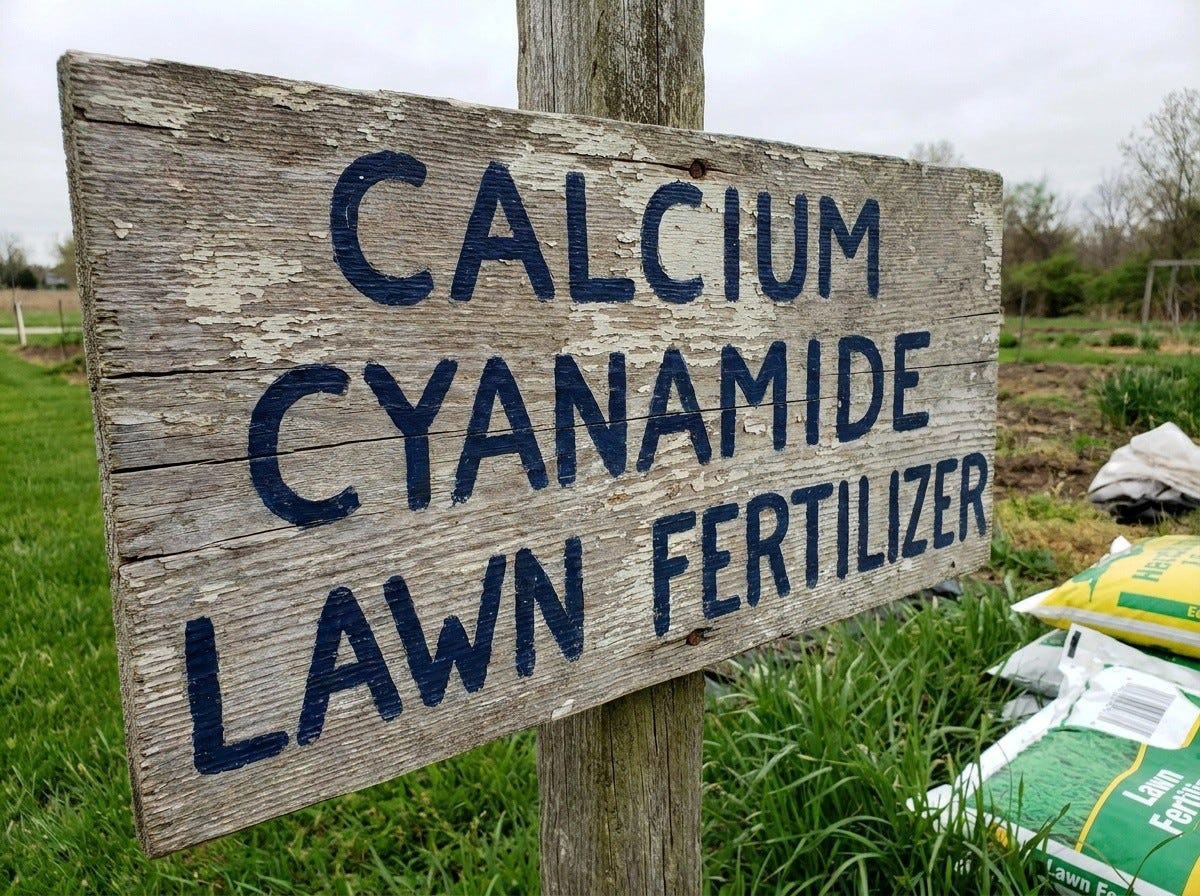
According to the Thermo Fisher Scientific Material Safety Data Sheet, CALCIUM HYDROXIDE is considered hazardous by the 2012 OSHA Hazard Communication Standard. It causes severe skin burns and eye damage, and may cause respiratory irritation. It is advised against use in food or drug. (Although supplements are not legally considered a drug, they are a subcategory of food.)
Although this method is a relatively simple procedure, the production process “will produce a large amount of waste residue and waste gas, causing some pollution to the environment.”
Now I’m sure you’re also wondering how much of the perceived benefits of taking creatine supplements have actually been proven. Interestingly, there always seems to be a disclaimer tagged onto every alleged benefit of taking it, with the notation that “More research is needed.”
But even more disconcerting is that, for every alleged benefit, alternate sources prove JUST THE OPPOSITE.
One piece of advice you’ll commonly see about creatine is that it works best when the supplements are taken IN CONJUNCTION WITH RESISTANCE TRAINING. In other words, if you’re actively working on building your muscles at the same time, it’s a lot easier to believe it’s actually the SUPPLEMENTS giving you those great results.
Therefore, if you just took creatine all by itself and laid around all day in front of the TV, you’d be pretty darn disappointed.

So here are some of the alleged benefits of taking creatine supplements that are contradicted by its known side effects:
1) It’s claimed that creatine “may help keep you from getting dehydrated by making your muscles hold more water” – yet one of the most common side effects is dehydration.
2) While it’s “thought to slow the growth of tumors” and “may also boost the ability of the immune system to fight cancer,” studies suggest that “creatine also can make cancer more likely to spread.”
3) It’s claimed that creatine “might help with brain health and thinking, especially as you get older,” but “studies have not shown a strong effect” and taking it “might not make a big difference.”
4) While one source suggested that creatine “might help with exercise and endurance when you have Parkinson’s,” a five-year trial concluded that it did not help slow the progression of Parkinson’s.

5) One source claimed that taking creatine “may slow down progression of ALS/Amyotrophic lateral sclerosis,” although “a bigger study didn’t show that it had significant benefits for slowing the disease.”
6) Sellers of creatine supplements make promises of “potential benefits” in areas such as “neurological health, bone health, and muscle mass preservation as they age.” But it’s also flat-out admitted that “some people who use it see no benefit at all” – especially those who are not experiencing any of that good old psychological Placebo Effect while participating in bodybuilding activities like resistance training.

Seems to be a whole lot of contradictions.
As for its safety, we are assured that “while taking creatine might not help the performance of all athletes, evidence suggests that it is safe when taken as directed.”
However, just a look at the Scientific Material Safety Data Sheets and OSHA Hazards of the ingredients tell you these supplements are NOT safe. Also, “some older reports have suggested that creatine might worsen kidney function in people who already have kidney conditions.” Like all synthetic supplements, they store up in the liver and kidney just as any chemical would.
You definitely won’t be seeing any of THESE warnings on the labels of creatine pill jars, though! Just more useless, toxic garbage being peddled as health supplements.
+++++++++++++++++++++++++++
Thank you for reading!
And now, if you haven’t already done so, please check out my book, “THE ENIGMA OF VITAMIN B12: NATURE’S ONLY MISTAKE?” to learn the complete sordid history and diabolical marketing of all synthetic supplements, which many have praised as fascinating, life-changing, and fun to read! (Only $13.90 FOR PAPERBACK during promotional period!)
LINK TO BOOK ON AMAZON

Thank you for another great and important article. Thank you for spending all this time on uncovering these crimes. What a gift for us. Before I read your book and listened to two interviews with you, I'd never have guessed how evil companies can be and how naive I was when it comes to "vitamins" and "supplements." (I had already understood the other pharma crimes.) It feels fantastic to have woken up. And I love your humor. It makes digesting all this information bearable.
Much love and gratitude from Friderike
Yes, we hear a lot about creatine, and how you can only get it from animal-sourced foods and supplements - just like B12 - and both are dependent on poisonous cyanide, as you point out. Part of the depopulation agenda - thanks for this helpful research!